You know what is not working. You have known for some time. The relationship, the job, the belief, the habit, the version of events you keep returning to. It is not working and you know it is not working and you stay anyway. The reason given is usually practical. The timing is not right. The conditions need to be different before you can move. You need more certainty before you can let go.
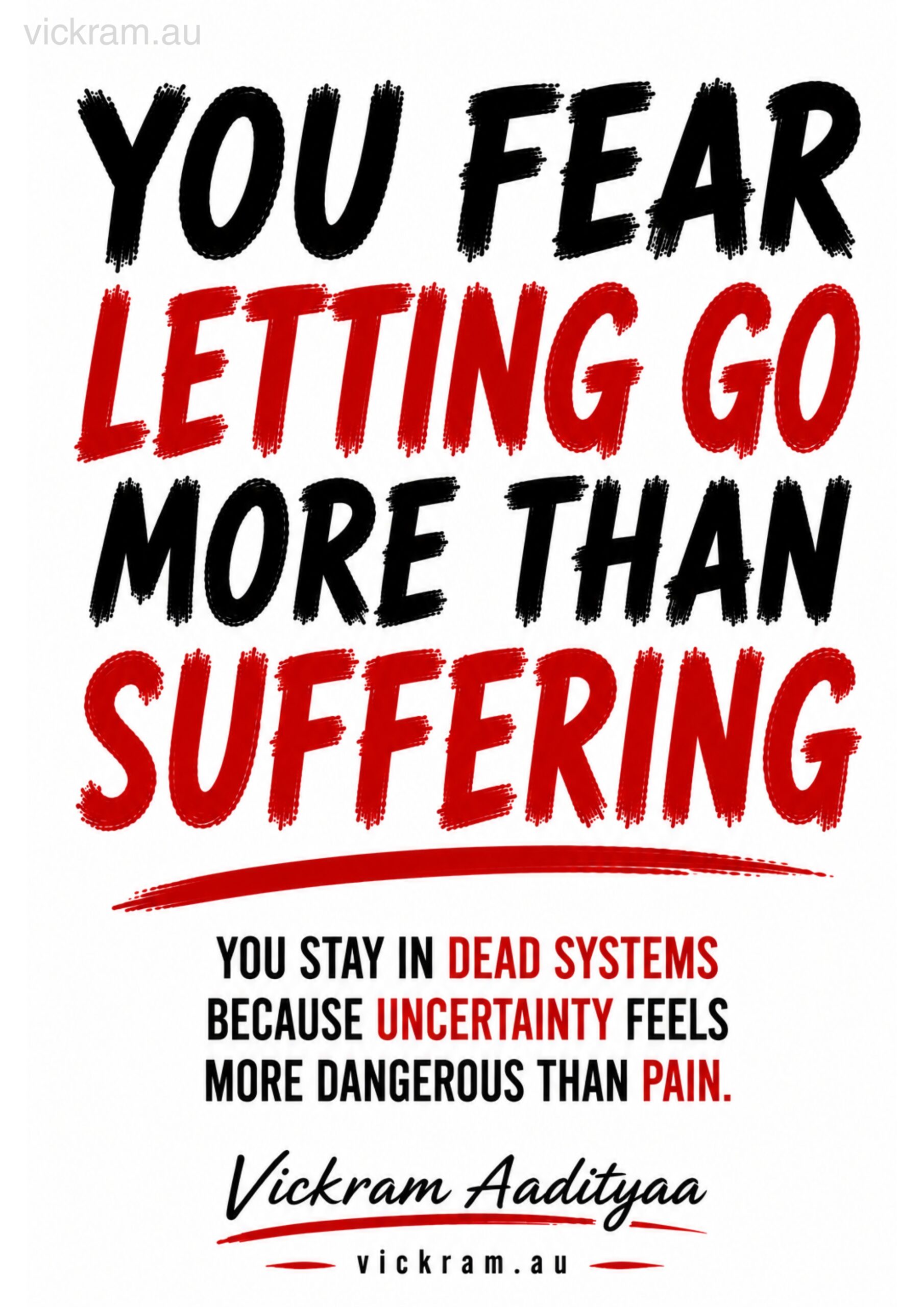
These reasons are not entirely false. But they are also not the primary reason. The primary reason is that staying, even in something that causes damage, is less frightening than the open ground on the other side of leaving. Known suffering has a shape. You know how to function inside it. You have built workarounds. You have learned its rhythms. The suffering is real, but it is predictable.
What comes after letting go is not predictable. It is uncertain in ways that the mind reads as dangerous. The danger is not in the new situation. The danger is in who you would have to become to be in it. Letting go often requires relinquishing not just the situation but the identity that was built in relation to it. You are not just holding onto the relationship. You are holding onto the version of yourself that exists inside it.
This is why people stay past the point that is good for them. Not because they do not see the damage. Because the damage is familiar and the alternative is unknown.
The unknown requires a self that can tolerate not knowing. That self has not yet been found.