Something happens. Before the event has finished arriving, the mind is already turning it into a story. Assigning cause. Finding pattern. Drawing conclusion. Placing it in relation to other events. Building a narrative that explains why this happened and what it means and where it fits in the larger arc of your life.
The narrative is not an accident. It is a defence. The raw event, uninterpreted, is too open. It sits there without edges. It does not tell you what to do next. The story gives it edges. It gives it a place in the sequence of events you call your life. It makes it manageable.
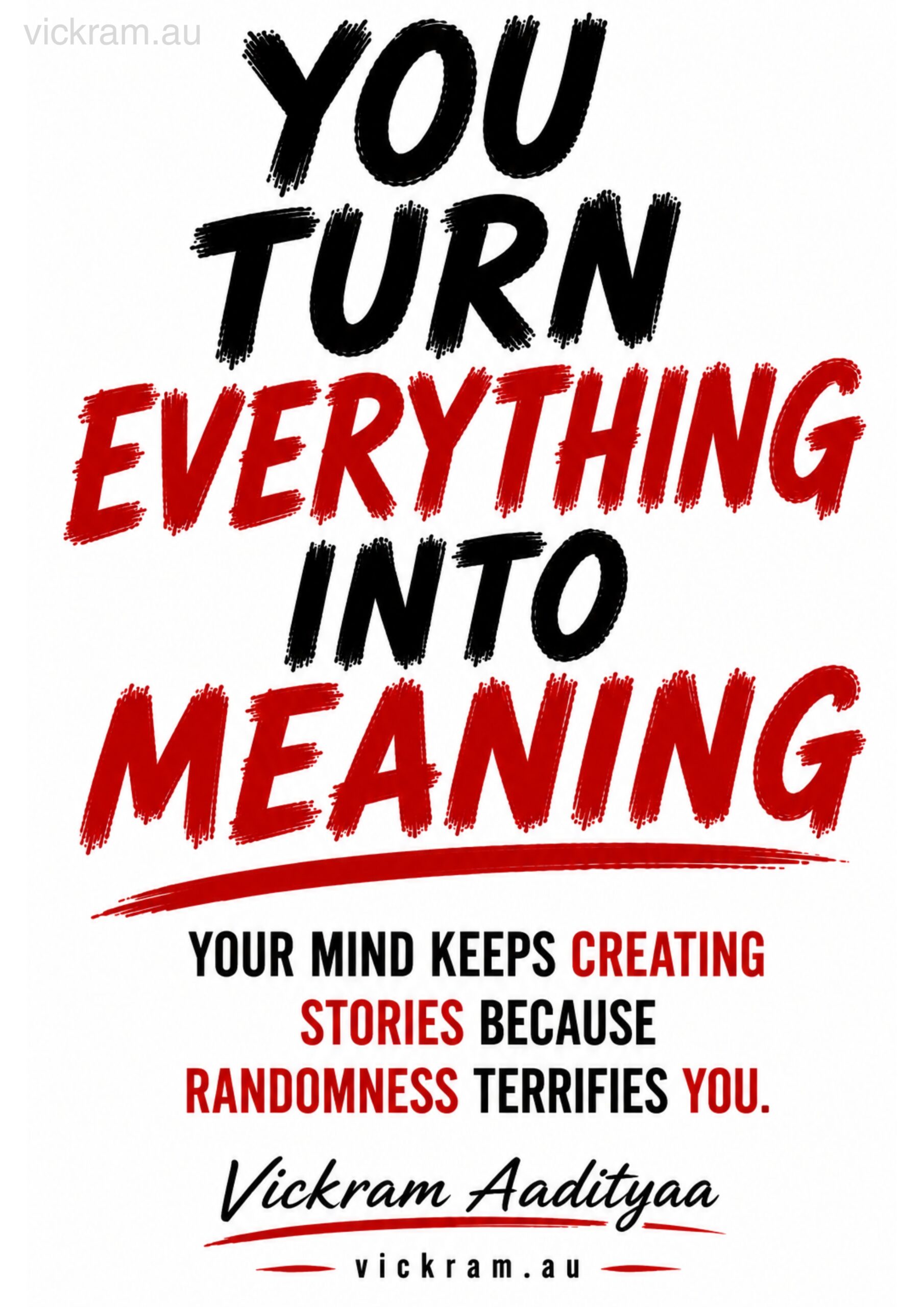
Randomness is almost intolerable to the human mind. The idea that something happened for no reason, that it fits no pattern, that it means nothing, produces a specific kind of anxiety that most people will do almost anything to avoid. So meaning is applied. Even to events that clearly do not carry it. Even to coincidences. Even to accidents. Even to the neutral.
The story you build becomes the thing you live inside. Not the event. The interpretation. You suffer from the interpretation more than the event in most cases. The event was brief. The story about the event, what it says about you, what it predicts, what it means, runs indefinitely.
You are a meaning-making machine operating in a universe that does not produce meaning. The meanings are yours. They are not in the events.
Seeing that clearly changes the relationship to the story. Not by removing it. By seeing it as yours to hold or put down.